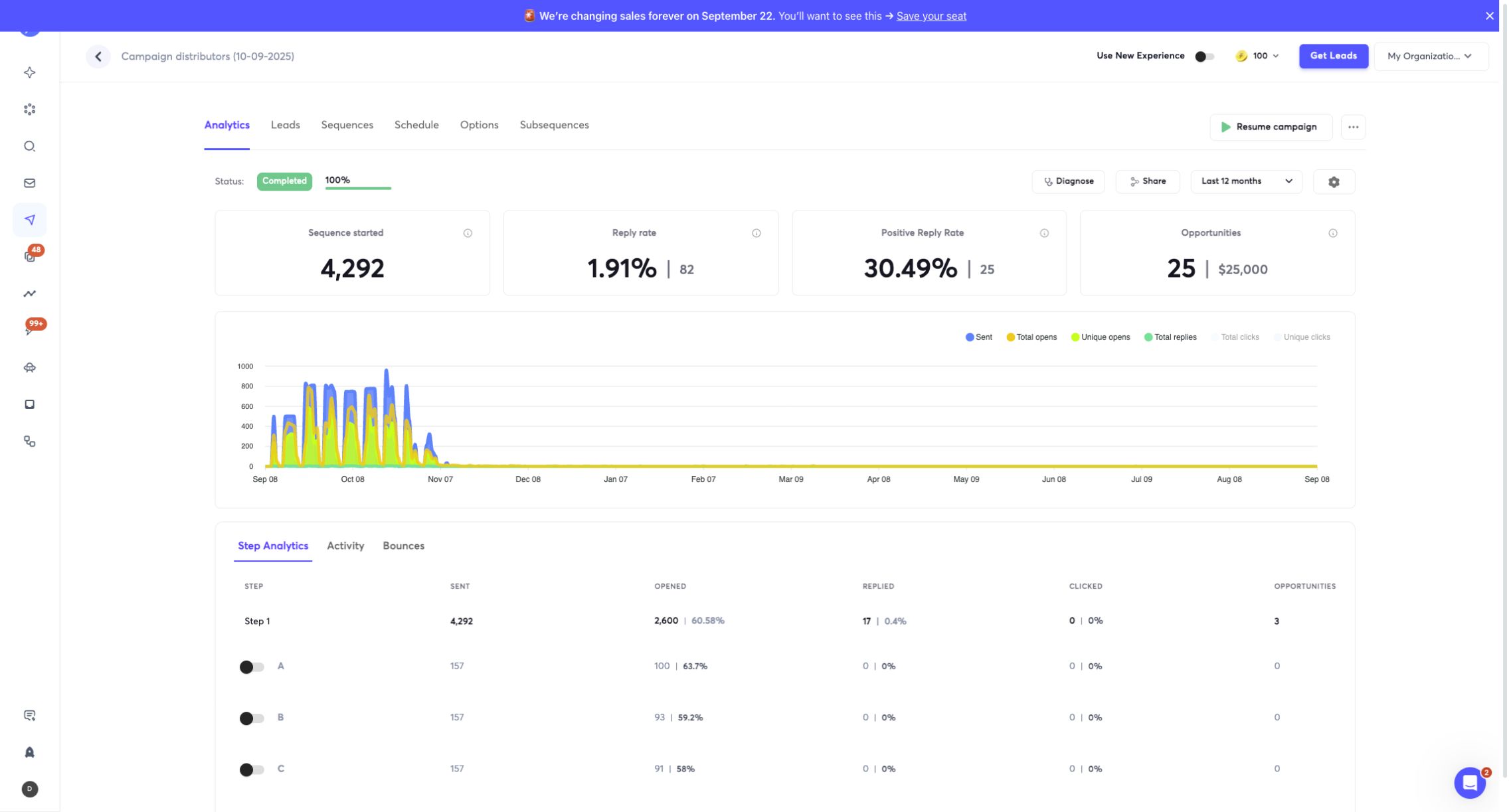
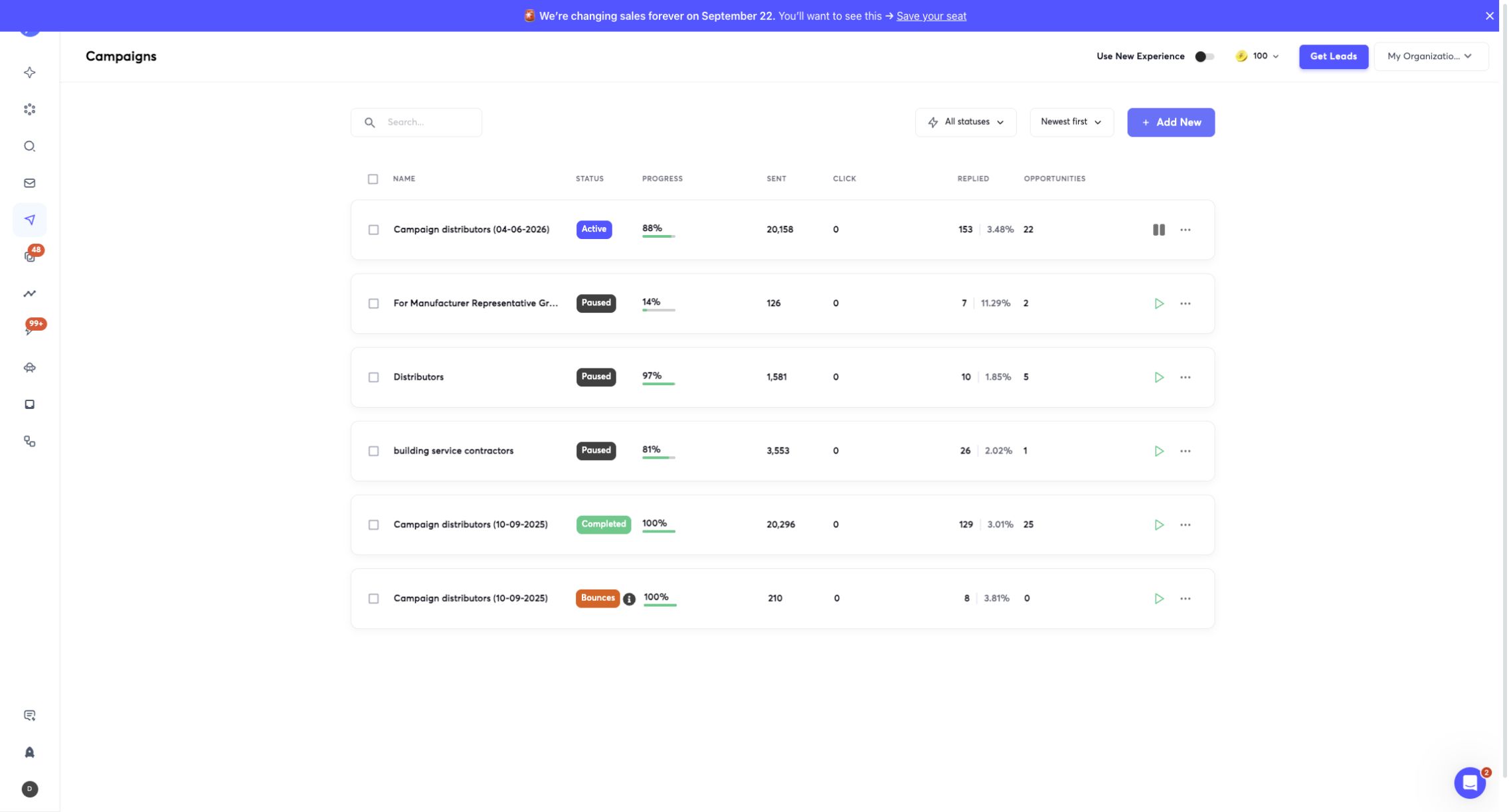
Across five Prolux campaign analytics views, Instantly recorded 8 opportunities from a trade-show motion and 47 from distributor acquisition. The sum is 55 recorded campaign opportunities.
That number is useful, but it needs a boundary. Instantly counts leads that have ever held an interested, booked-meeting, completed-meeting, closed, or other positive status as opportunities. The platform also notes that historical positives can remain in the count after a later status change or lead deletion.
So this article does not call the 55 signed partners, unique companies, closed deals, or revenue. It shows what the campaign analytics recorded, how the motions differed, and how we audited the proof before using it in a sales conversation.
The result at a glance
One building-services opportunity, five distributor opportunities, and two manufacturer-representative opportunities.
Twenty-five recorded in the 2025 campaign and twenty-two recorded in the 2026 campaign.
A sum of the five analytics views, not a claim of 55 unique or closed accounts.
One campaign overview and five campaign-level analytics screenshots, preserved byte for byte.
Motion one: use the event as context, not the entire pitch
The trade-show campaigns did not rely on a generic invitation. They separated three audiences whose reasons for speaking with Prolux were different: building service contractors, distributors, and manufacturer representative groups.
That segmentation matters. A contractor evaluates operating cost and equipment performance. A distributor needs product, margin, territory, and customer-demand context. A representative group needs to understand where the product fits its line card and relationships.
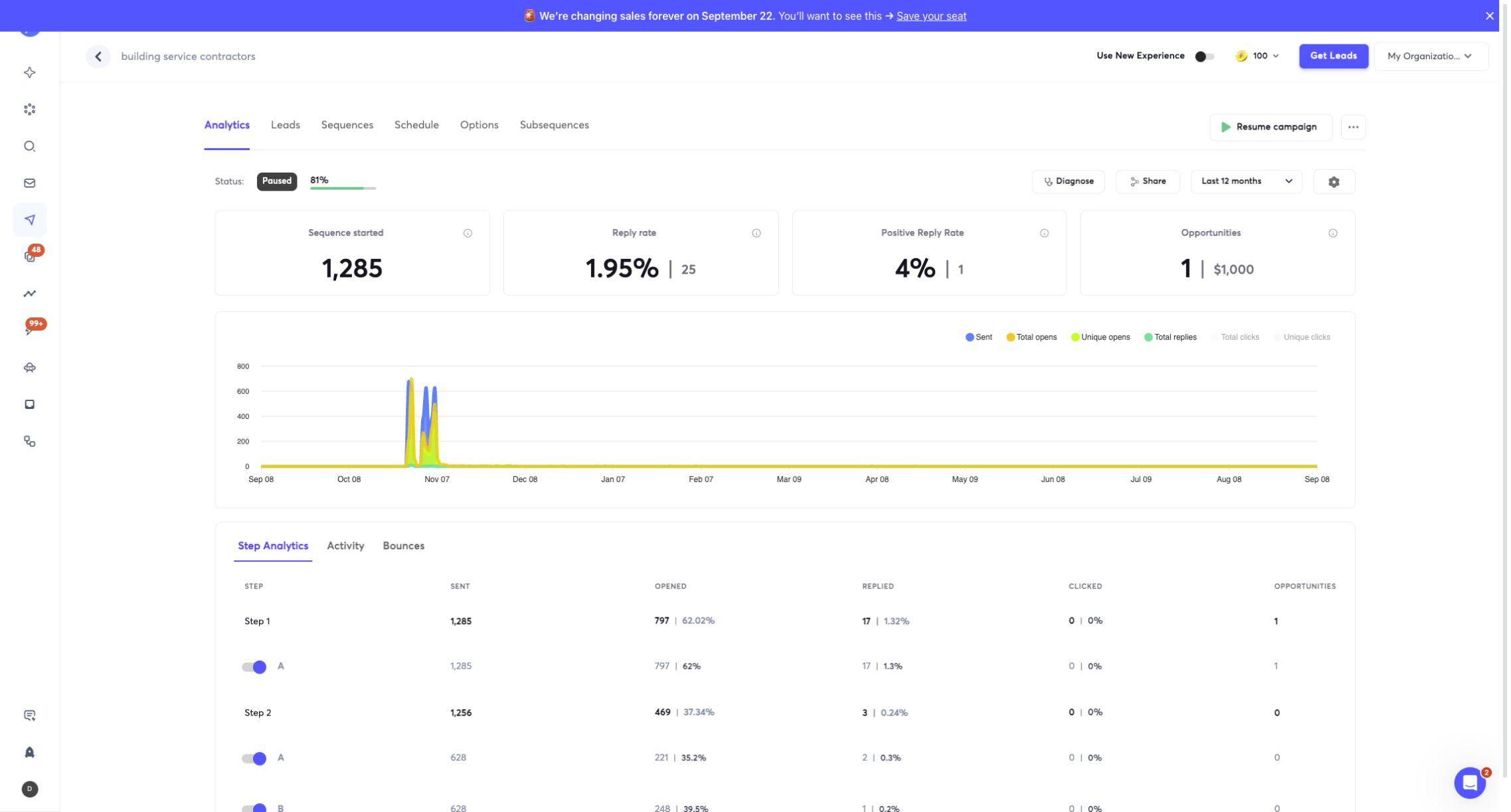
Building service contractors: 1 opportunity.
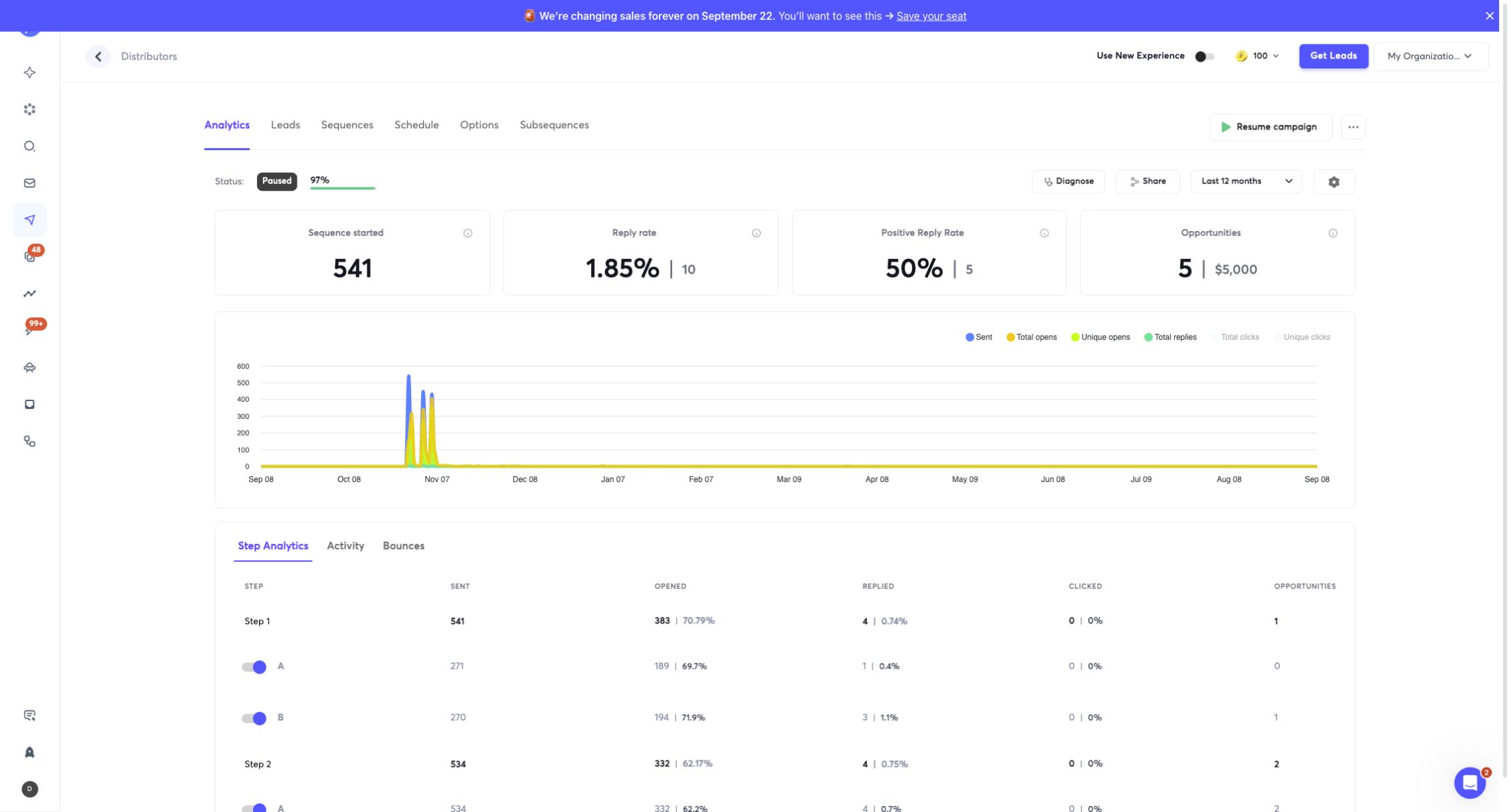
Distributors: 5 opportunities.
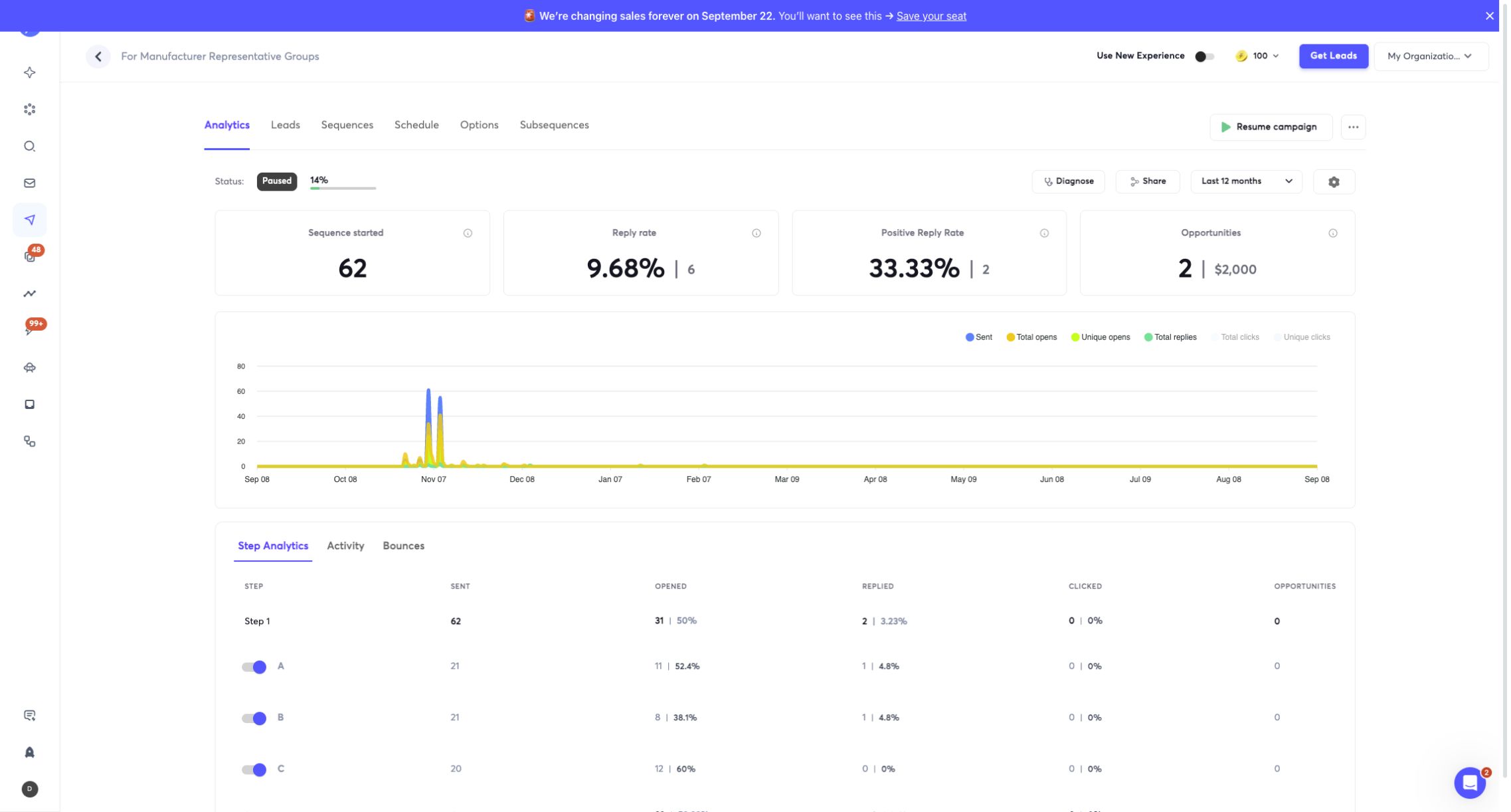
Manufacturer representative groups: 2 opportunities.
Motion two: sell the distributor economics
The distributor campaign was an always-on acquisition motion rather than a short event window. The copy focused on a patented product, operating-cost reduction, protected margins, and an easy reply path for more information.
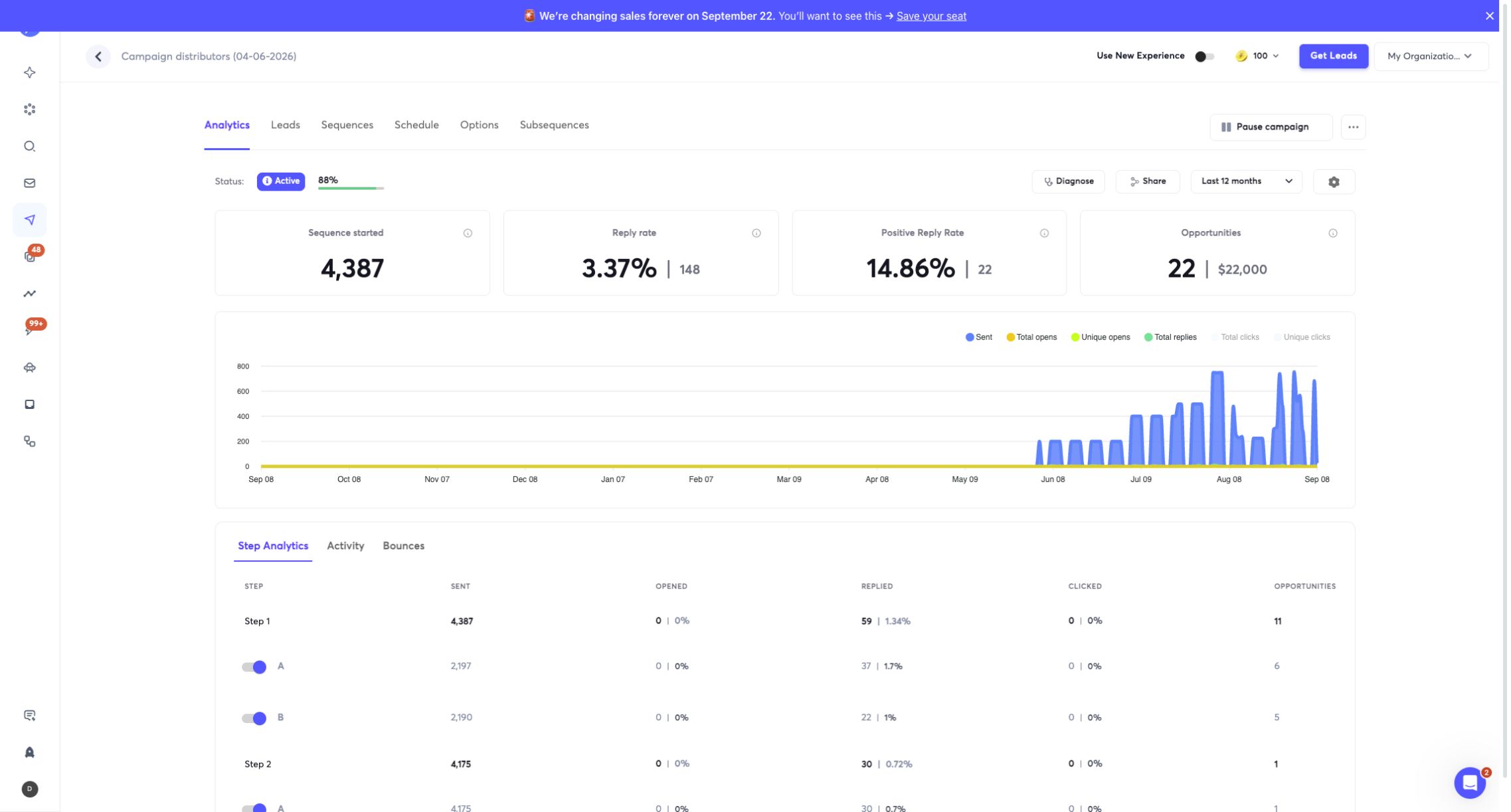
The 2025 analytics view recorded 25 opportunities. The 2026 view recorded 22. That makes 47 recorded distributor-campaign opportunities across the two periods.
The proof audit changed the claim
A dashboard card is the beginning of the audit, not the end. We compared campaign records with reply-level evidence and separated relevant interest from unrelated replies, vendor pitches, existing customers, and positive labels that did not have a matching scoped reply.
This is why the public claim stays at the platform level. The screenshots prove the campaign analytics totals. The reply audit supports meaningful buying and partnership interest inside the campaign, but it does not independently prove that every dashboard opportunity became a signed distributor.
Claim rule: report the metric you actually observed. An interested reply is not a booked meeting. An opportunity is not a signed partner. Pipeline is not revenue.
How to create an effective cold email outreach campaign from this pattern
- Choose one commercial motion. Event attendance, distributor acquisition, and contractor demand should not share one vague message.
- Segment by the buyer's job. The reason to care changes across contractors, distributors, and representatives.
- Lead with one economic idea. Product features become more credible when tied to operating cost, margin, or customer demand.
- Make the reply easy. A simple keyword or request for details gives the prospect a low-friction next step.
- Audit positive statuses. Compare campaign analytics with replies before a result becomes public sales proof.
For the evidence package that follows a positive reply, use the prospect work-sample framework. For weak campaign results, use the cold email diagnostic before rewriting the copy.
What the campaign overview adds
What should a cold email case study include?
A useful cold email case study needs the audience, offer, campaign period, platform evidence, exact metric definition, and a clear statement of what the evidence does not prove. Screenshots should retain their original numbers and context.
Are Instantly opportunities the same as sales?
No. Instantly documents that several positive statuses can count as opportunities, including interested and booked-meeting statuses. Closed is one possible status, not the definition of every opportunity.
How do you verify cold email results?
Start with the platform analytics, then reconcile the counted leads against received replies and CRM outcomes. Preserve duplicates, status changes, and exclusions instead of silently removing them from the audit trail.